

Home/Dentures
Tooth replacement
Dentures in Woodstock
Complete and partial dentures are removable replacements for missing teeth, used to restore function and appearance.
What Are Dentures?
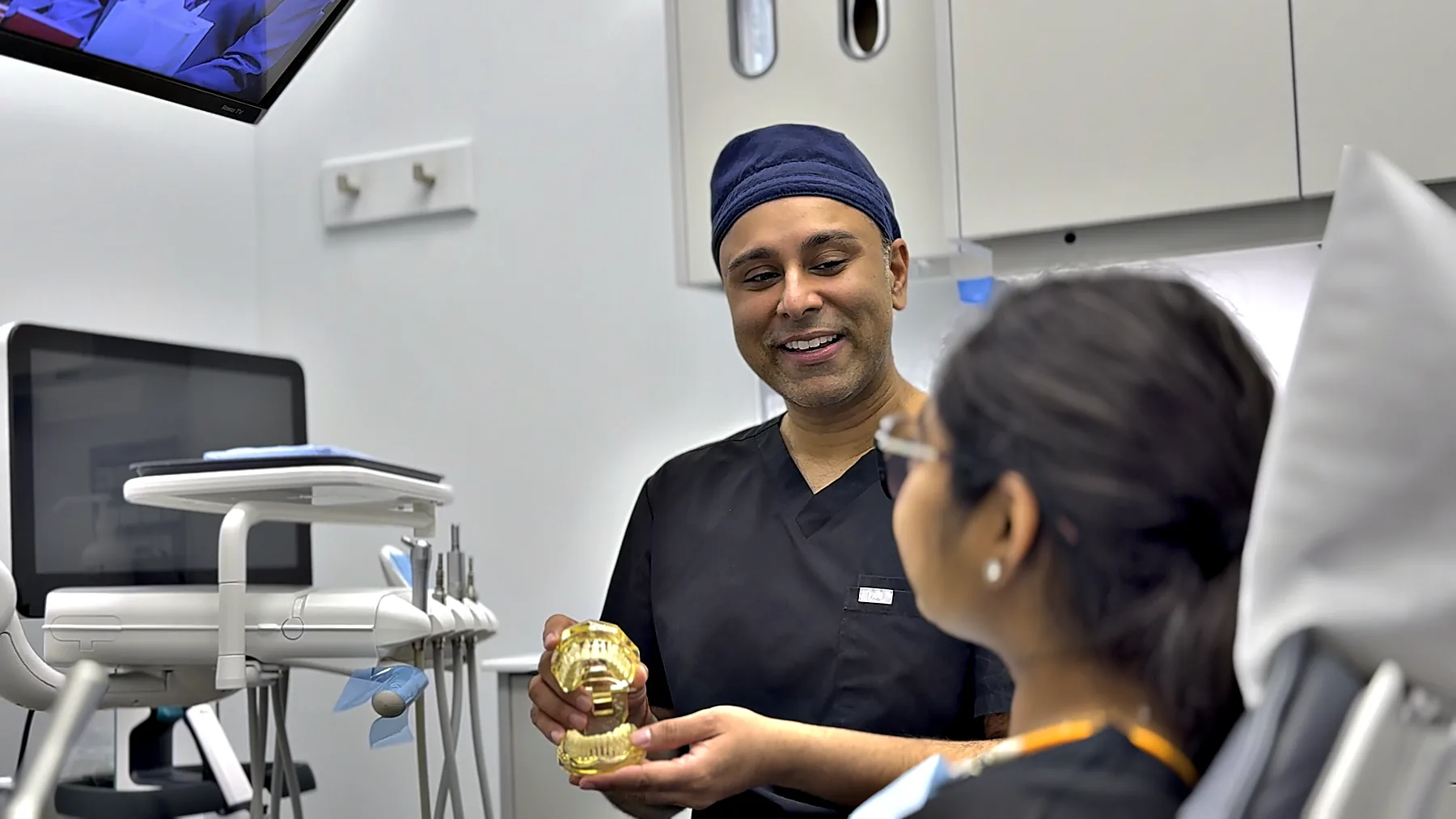
A denture is a removable appliance that replaces missing teeth and rests on the gums. Each denture is custom-made from impressions and measurements of the patient's mouth.
Dentures help to:
- Restore the ability to chew and speak
- Support the lips and cheeks
- Prevent remaining natural teeth from shifting
- Restore the appearance of the smile
When Dentures May Be Recommended
Dentures may be recommended for patients who:
- Are missing all of the teeth in the upper or lower jaw
- Are missing several teeth in the same jaw
- Have teeth that cannot be restored and need to be removed
- Have existing dentures that no longer fit comfortably
- Prefer a removable option to a bridge or implant
Where natural teeth are healthy or can be restored, preserving them is generally preferred. Bridges and dental implants are also discussed as alternatives where they are suitable.
New patients are welcome, including those who have not visited a dentist in some time.
Types of Dentures
The type of denture recommended depends on how many natural teeth remain and the health of those teeth and the surrounding gums.
- Complete dentures
- Also known as full dentures, complete dentures replace all of the teeth in the upper or lower jaw and rest on the gums.
- Partial dentures
- Partial dentures replace one or more missing teeth and fit around the remaining natural teeth, which stay in place.
What to Expect During Treatment
Dentures are typically made over several appointments so that the fit, bite and appearance can be checked at each stage.
Examination and planning
The mouth, any remaining teeth and any existing dentures are examined, and treatment options, timelines and costs are reviewed. Patients with existing dentures are asked to bring them to this appointment.
Impressions and measurements
Impressions of the mouth and records of how the jaws meet are taken so the denture can be custom-made.
Try-in
A trial version of the denture is tried in so the fit, bite and appearance can be reviewed and adjusted before it is finished.
Fitting
The finished denture is fitted and checked, and instructions for wearing and cleaning it are provided.
Follow-up adjustments
Follow-up appointments allow sore spots to be relieved and the fit to be refined as the mouth adjusts.
Extractions Before Dentures
Teeth that cannot be restored may need to be removed before a denture is made. Extractions are performed at our Woodstock office, where oral surgery is provided by Dr. John McIntosh, an oral and maxillofacial surgeon.
Sedation and sleep dentistry options are available for oral surgery. The timing of the new denture is planned around healing and is discussed before any teeth are removed.
Adjusting to New Dentures
A period of adjustment is normal with new dentures while the muscles of the cheeks and tongue adapt to holding them in place.
During the first few weeks, patients may notice:
- A feeling of fullness in the mouth
- Increased saliva flow
- Minor sore spots on the gums
- Slight changes in speech
- Difficulty chewing firmer foods
Eating soft foods cut into small pieces, chewing on both sides of the mouth and reading aloud can help during this period. Sore spots can be relieved with a minor adjustment at a follow-up appointment.
Caring for Dentures
Daily care keeps dentures clean and helps protect the gums and any remaining natural teeth.
Recommended care includes:
- Removing and rinsing dentures after meals
- Brushing dentures daily with a soft brush
- Brushing the gums, tongue and any remaining teeth
- Keeping dentures moist when they are not being worn
- Handling dentures over a folded towel or a basin of water
- Attending regular check-ups to review fit and oral health
Relines and Adjustments
The gums and jawbone gradually change shape over time, which can cause a denture to loosen or become uncomfortable.
Depending on the condition of the denture, treatment may include:
- Adjustment
- Minor changes to the denture to relieve sore spots or improve comfort.
- Reline
- Reshaping the fitting surface of the denture so it sits closely against the gums again.
- Repair or replacement
- Recommended when a denture is cracked, broken or significantly worn.
Regular check-ups allow the fit of a denture to be reviewed and any changes to be addressed early.
Vansittart Dental, Woodstock
Book a Consultation
Patients considering dentures, or whose current dentures feel loose or uncomfortable, are welcome to book a consultation. Treatment options and associated costs are explained before any work begins.
Frequently Asked Questions
Answers to common questions about dentures. For anything not covered here, please contact our office.
How Long Does It Take to Adjust to New Dentures?
An adjustment period of a few weeks is common while the mouth and muscles adapt. Speaking and eating become easier with practice, and follow-up appointments help relieve any sore spots.
Can I Keep Some of My Natural Teeth?
Where remaining teeth are healthy or can be restored, they are generally preserved, and a partial denture is made to fit around them.
What If Teeth Need to Be Removed First?
Extractions are performed at our Woodstock office, where oral surgery is provided by Dr. John McIntosh, an oral and maxillofacial surgeon. Sedation and sleep dentistry options are available for oral surgery.
How Many Appointments Are Needed?
Dentures are typically made over several appointments, including an examination, impressions, a try-in and the final fitting. The expected timeline is discussed at the first appointment.
What Can Be Done About Loose Dentures?
Dentures can loosen as the gums and jawbone change over time. Depending on the condition of the denture, an adjustment, reline or replacement may be recommended.
How Should Dentures Be Cleaned?
Dentures should be removed and brushed daily, and the gums and any remaining teeth should be brushed separately. Instructions for cleaning and storing dentures are provided at the fitting appointment.
Related Services
Dental Implants
Replacement of missing teeth with crowns supported by posts in the jawbone.
Learn moreCrowns and Bridges
Custom restorations that repair damaged teeth and replace missing teeth.
Learn morePeriodontal Care
Assessment and treatment of gum disease, with ongoing care to maintain healthy gums.
Learn more